The information on this website is general in nature and does not take into account your objectives, financial situation, or needs. Consider seeking personal advice from a licensed adviser before acting on any information.
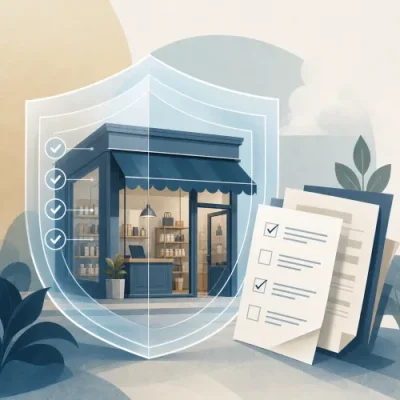
A shop insurance quote is more than a premium. Learn how to review cover limits, excesses, exclusions, business details, assumptions and Product Disclosure Statement information before comparing options.
When you receive shop insurance quotes, it can be tempting to compare them by premium alone. For Australian retail businesses, however, the cheapest-looking quote may not provide the cover, limits or policy terms your store needs. A quote is a summary of what an insurer or intermediary may be prepared to offer based on the information provided, subject to the insurer's criteria and the final policy documents.
This guide explains how to read a retail insurance quote, what details to check, and which questions to ask before you accept cover or renew a policy. It is general information only and does not take into account your business objectives, financial situation or needs.
Start with what the quote is actually offering
A shop insurance quote should tell you which types of cover are included, which are optional, and which have not been quoted. Before focusing on the price, check whether the quote matches the risks you expected to insure.
Common retail business covers may include:
- Public liability insurance for certain third-party injury or property damage claims connected with your business activities.
- Product liability insurance for certain claims involving products you sell, distribute or supply.
- Property cover for insured damage to business contents, stock, fixtures or fit-out, depending on the policy.
- Theft cover for insured theft or attempted theft, often subject to security conditions.
- Glass cover for insured damage to shopfront glass or signage, if included.
- Business interruption cover for certain income interruption following an insured event, subject to limits, waiting periods and policy conditions.
- Money, machinery breakdown, portable equipment or cyber cover where these are offered and relevant to the business.
If you are unsure which insurance types are usually considered by store owners, you may find it helpful to review the broader guide to essential insurance types for e-commerce and physical store owners before comparing individual quotes.
Check the business details before anything else
Insurance quotes rely heavily on the information provided about your business. If the quote describes your shop incorrectly, the premium and cover terms may not reflect your actual risk. Incorrect or incomplete details can also create problems if you need to make a claim.
Review the quote for:
- Legal and trading names: Check that the insured entity, business name and any relevant ABN or ACN details are accurate.
- Business activities: Make sure the description reflects what you actually do, including online sales, repairs, food handling, product importing, manufacturing, demonstrations or off-site sales.
- Premises address: Confirm the location, tenancy details and any storage addresses are correct.
- Annual turnover and wages: These figures may influence liability and other rating factors.
- Stock and contents values: Check whether values reflect peak trading periods, seasonal stock or higher-value items.
- Security and safety details: Alarms, locks, sprinklers, CCTV, fire protection and building construction may affect the terms offered.
- Claims history: Confirm that previous claims or incidents have been disclosed accurately where requested.
If the quote was prepared from an online form or previous renewal details, do not assume everything has carried across correctly. A small change in business activity, stock value or location can affect the insurer's assessment.
Understand the premium breakdown
The total amount payable is important, but it is only one part of the quote. A shop insurance quote may include base premium, government charges, GST, stamp duty, broker fees, administration fees and payment charges. These items may be shown separately or combined, depending on how the quote is presented.
When reviewing the cost, ask:
- Is the quoted amount annual, monthly or for another period?
- Are instalment fees or funding charges included if paying monthly?
- Are broker or administration fees shown separately?
- Is the quote valid only until a specific date?
- Could the premium change if information is corrected or underwriting questions are updated?
Premiums depend on factors such as business type, turnover, location, sums insured, claims history, selected cover, excess levels and insurer criteria. A lower premium may reflect narrower cover, higher excesses, lower limits or more restrictive conditions.
Compare limits, sub-limits and sums insured
One of the most important parts of reading a shop insurance quote is checking how much the insurer may pay for different types of claims. These amounts may be described as limits, sub-limits, sums insured or benefit limits.
| Quote term | What it generally means | What to check |
|---|
| Limit of liability | The maximum amount payable for a particular type of cover or claim, subject to policy terms. | Whether the amount is suitable for the scale of your retail activities and potential exposures. |
| Sum insured | The selected insured value for items such as stock, contents, fixtures or equipment. | Whether the figure reflects realistic replacement or reinstatement costs, not just book value. |
| Sub-limit | A smaller limit that applies within a broader cover section. | Whether valuable items, money, glass, signs, spoilage or portable equipment have lower limits. |
| Indemnity period | For business interruption, the period over which insured loss of income may be assessed. | Whether the period is long enough for rebuilding, refitting, restocking and reopening after an insured event. |
Be careful when two quotes list the same headline cover but different limits. For example, two policies might both include theft cover, but one may have a lower sub-limit for stock in a storeroom or items away from the premises.
Look closely at the insurance excess
An insurance excess is the amount you may need to contribute towards a claim. A quote may include a standard excess and additional excesses for certain events, locations, claim types or circumstances.
Check whether the quote includes:
- a standard property excess;
- a liability excess;
- separate excesses for theft, storm, water damage or glass;
- higher excesses for certain locations or building types;
- an excess for each claim, each event or each affected item; and
- different excess options that change the premium.
A higher excess can sometimes reduce the premium, but it may also increase your out-of-pocket cost at claim time. Consider whether the excess would be manageable for your business if an insured event occurred.
Read the exclusions before accepting a quote
Insurance exclusions explain what is not covered. They are usually found in the Product Disclosure Statement, policy wording and sometimes in the quote schedule or endorsements. Exclusions can be broad, specific or conditional.
Common areas to check include:
- Unoccupied premises: Cover may be restricted if the shop is vacant or unattended for longer than the allowed period.
- Flood, storm or water damage: Definitions and availability can vary between policies.
- Theft conditions: Some policies require forced entry, specific locks or alarm activation.
- Wear and tear: Gradual deterioration, poor maintenance or faulty workmanship is often excluded.
- Cyber incidents: Standard property or liability cover may not cover online fraud, data breaches or system interruption.
- Imported or modified products: Product-related exposures may need careful review if you import, relabel, assemble or alter goods.
- High-risk stock: Jewellery, tobacco, electronics, firearms, alcohol or other higher-risk stock may have special terms or limits.
Do not rely only on a quote summary to understand exclusions. The quote should be read with the relevant Product Disclosure Statement and any policy schedule or wording supplied.
Review endorsements, conditions and assumptions
Endorsements are changes or additions to the standard policy terms. They can broaden, restrict or clarify cover. A quote may also include assumptions made by the insurer or broker when preparing the offer.
Examples may include requirements that:
- security alarms are maintained and activated outside business hours;
- stock is stored above floor level in flood-prone areas;
- fire protection equipment is serviced regularly;
- the premises are not used for activities outside the stated business description;
- hazardous goods are not stored beyond a certain amount; or
- claims, incidents or material changes are disclosed before cover starts.
Conditions matter because a claim may be affected if a requirement has not been met. If an endorsement is unclear, ask for an explanation in plain English before accepting the quote.
Use the Product Disclosure Statement properly
The Product Disclosure Statement, commonly called the PDS, sets out important information about the insurance product, including cover sections, exclusions, conditions, claims processes and other terms. For many retail businesses, the quote and schedule are easier to read, but the PDS contains detail that can materially affect how the cover works.
When reading the PDS, focus on:
- the definitions section, especially terms such as flood, stock, premises, employee, theft, business interruption and insured event;
- what each cover section includes and excludes;
- claim notification requirements;
- maintenance and security obligations;
- basis of settlement, such as replacement, reinstatement or indemnity value;
- cooling-off rights, if applicable; and
- complaints and dispute resolution information.
You may also be given a Target Market Determination for the product. This can help explain the class of customers the product is designed for, but it is not a substitute for checking whether the cover suits your own circumstances.
Compare shop insurance quotes like-for-like
A meaningful shop insurance comparison looks beyond the total premium. Try to compare quotes using the same business details, cover sections and insured values. If the inputs are different, the quotes may not be directly comparable.
Before deciding, compare:
- included and excluded cover sections;
- limits, sub-limits and sums insured;
- standard and special excesses;
- business interruption waiting periods and indemnity periods;
- policy conditions, assumptions and endorsements;
- payment terms and fees;
- claims support and contact options;
- insurer, underwriting agency or intermediary details; and
- how changes to your business must be reported during the policy period.
If you are ready to request or compare shop insurance quotes, you can start from the Shop Insurance Solutions homepage. Keep in mind that any quote or policy offer will depend on the information you provide and the relevant provider's underwriting criteria.
Questions to ask before accepting a retail insurance quote
If any part of the quote is unclear, ask questions before you proceed. Useful questions include:
- What covers are included automatically, and which are optional?
- Are any covers excluded because of my business type, stock or premises?
- What is the maximum payable for each major cover section?
- Do any sub-limits apply to stock, money, glass, equipment or items away from the premises?
- What excesses apply to different claim types?
- What assumptions have been made about my turnover, stock value, security or trading activities?
- What conditions must I meet for theft, fire, water damage or business interruption claims?
- How do I update the policy if I expand online, move premises or change my product range?
- What documents will form the final policy contract?
If you need help interpreting policy wording, exclusions or endorsements, consider speaking with a licensed insurance broker or adviser. You can use the site's brokers page as a starting point for understanding when broker support may be useful.
Red flags in a shop insurance quote
A quote does not need to be perfect, but some issues should prompt a closer review. Be cautious if:
- the business description is too broad, too narrow or obviously inaccurate;
- important covers you requested are missing or marked as not insured;
- stock or contents sums insured are much lower than realistic replacement costs;
- the premium is much lower than other quotes but the excesses or exclusions are not clear;
- the quote refers to endorsements that you have not been given;
- high-value or high-risk stock is not specifically addressed;
- business interruption cover is included but the indemnity period is short or unclear; or
- the quote expires before you can properly review the PDS and policy wording.
It may also be worth reviewing your broader cover needs regularly, especially after changes to premises, stock, staffing, turnover or sales channels. For a wider review process, see the guide to regularly reviewing your shop insurance coverage.
Final checklist before you proceed
Before accepting a shop insurance quote, work through a simple checklist:
- Confirm your business name, ABN, address and activities are accurate.
- Check each cover section and note anything not included.
- Review limits, sub-limits, sums insured and indemnity periods.
- Identify all excesses and when they apply.
- Read the exclusions, conditions, endorsements and assumptions.
- Compare the quote against the PDS and any schedule or policy wording.
- Ask questions about unclear wording before paying or binding cover.
- Keep copies of the quote, PDS, schedule and any written explanations.
A good quote review is not about finding a single perfect policy. It is about understanding what is being offered, what is not being offered, and whether the terms align with your retail business risks, budget and tolerance for uncertainty. The final decision should be based on your circumstances and, where needed, professional guidance.
Published: Monday, 12th Oct 2026
Author: Paige Estritori



No comments yet. Be the first to share your thoughts.